A newsletter and podcast focused on Friday Strout's fiction and tabletop roleplaying games. Featuring top industry contributors from both the professional Game Master scene, game designers, writers, artists, and more!
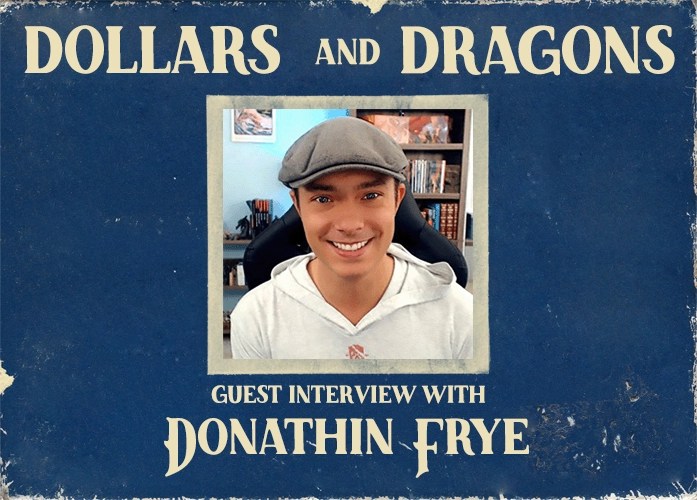
I had the wonderful Donathin Frye (he/him) on for a very nerdy chat! We talk our roots in tabletop (which surprisingly was MUDs), tabletop design and getting started, some of Don’s work like the Fallout series, etc. Check out his work in the links below.
So you’ve got yourself a crew that you want to play with more. You’ve been playing with them a while and the energy is fantastic. They’re enjoying the game, too. At the end of the session they are breathing heavy, exclaiming, sharing their favorite moments, complimenting one another, etc. You’ve got the recipe for seeding a second game. But you don’t want to run just any game – you want to run something other than Dungeons & Dragons.
It can be difficult to get others to commit long-term for something new, so you start small. Try these strategies to open up your players to the possibility of helping you grow and expand your business, within reason. Sometimes, you might only get a game or two extra out of it – but that’s not bad. That’s good! It’s 1-2 games you would not have had previously.
Scaling takes time, effort, and you’re going to stumble a bit on the way. Build your new tables as solidly as you can to accident proof them. You have to be especially thorough in building your non-D&D game tables.
First, let’s vet your player(s) that you are going to approach. Sometimes, this is the whole table – others, it’s only 1-2 players. If you approach the wrong people before they are ready or before they are open to the idea, you will not “close” with them (make the sale). That is okay – they can come around later as long as you are not pushy.
Ideal 2nd Game Player:
Good attitude
Plays well with others and is charismatic
Roleplays to include others and helps others become more engaged
Provides you with feedback privately but is not rude
Helps out newbies
If you have yourself one of these players, then this is a prime candidate for someone to seed your new game. From here, I always introduce a one shot or short campaign series to interrupt the current long-form campaign. e.g. We’re playing Curse of Strahd, and I run a 3 session campaign of HEART.
I pitch it to my players. Here is how:
The Indie Game Pitch
1 Page Player Brief
YouTube vibe video (2-5m at most)
Pre-gen characters
Automation in your VTT if applicable (Foundry’s Pathfinder 2e)
A campaign you are excited to run
Ideally you have felt things out with them for the game here and there. You’ve shared one or two things with them in your gossip period and they have expressed interest. Then, you drop the above proposal. If they accept, you post a new game listing, cancel the sessions scheduled for the block of time, and onboard your current players. You can either do this separately from the potential new joins (if your table isn’t full) or you can wait to do this on the first new session day.
From there, you’ve already done all the hard stuff. If they love the new game, you will have a much easier time opening it up on a separate day and getting some of them to bite.
Overcoming Objections
Often people do not want to be sold to directly, so you have to be indirect about it. Therefore, you need to build a list of likely objections that they will have in order to resolve them before they come up.
Too expensive? (Charge the same price as your current game, unless you can justify a higher price.)
Not enough time? (Run it during your current session time for a short period. They may reconsider a second game after having a ton of fun playing it.)
Only like D&D? (This one is difficult to overcome, but you can try running D&D adjacent things or game systems that take less than 5 minutes to learn with pre-gens.)
Don’t want to learn a new system? (Automation, cheat sheets, pre-gens, everything that gets in the way of them having fun sooner rather than later.)
Anyway, that’s that. Let me know what it is that you do to bring people in for indie games! Also, if you’d consider supporting me on Patreon, then you gain access to the exclusive pro GM community on my Discord who offers much better help than you find on the streets.
This time on Dollars & Dragons we invited over our favorite rascals to talk about their new journalism website: https://rascal.news/ – make sure to support them by subscribing as they are 100% independent!
We chat about TTRPG news, the culture of journalism, queer culture, white people, Twitter, diversity in projects, abusers in the industry, and radically loving others. Bonus content: Friday talks about a Grindr date.
Hey! I have just released a podcast of our workshop that I ran answering questions helping pro GMs and aspiring freelancers in TTRPG. Check it out here:
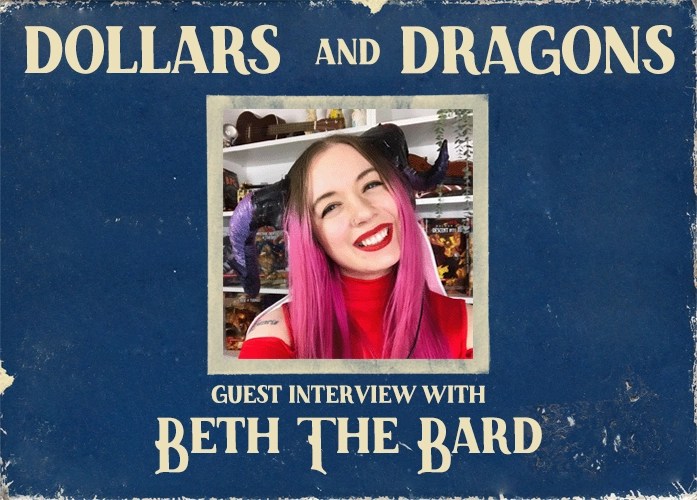
This time we had on Beth The Bard (she/her)! She is a game designer, publisher, and professional Dungeon Master. Her work includes She Is The Ancient, Fallout: The Roleplaying Game Settler’s Guide Book, Daughter of Frankenstein, and The Hourglass Coven.
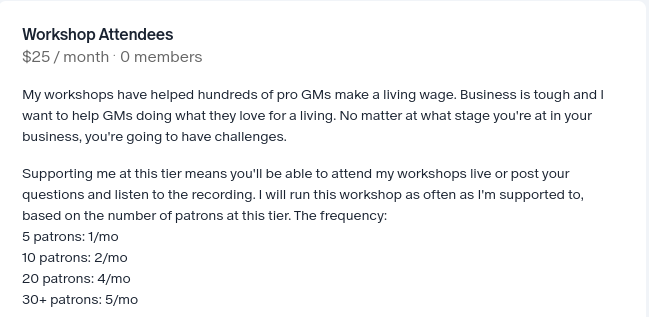
I’ve been running pro GM workshops for the past 2 years and have helped hundreds of pro GMs make a living wage. Bad news first: I am unable to continue doing so for free. The good news? It’s $25 a month to enjoy great up-to-date advice on from me on everything pro GMing via Patreon. I will record the workshops and upload them for patrons in the $25 tier.
If you want to enjoy a catered and professional help on your listings or your pro GMing business – this is the tier for you. Just $25/mo for the workshop attendee tier. If you want individual and focused help, there is always the $125/mo tier where I get on a call with you for an hour every month to do check-ins and shape your biz.
In order to support this model and not completely burn myself out at work, I need a certain number of patrons per month to compensate me for my time. You’re going to get more for your money the more patrons are present, so there is a great incentive to encourage other pro GMs to support me, as well. I’ve set the price as low as I think is feasible.
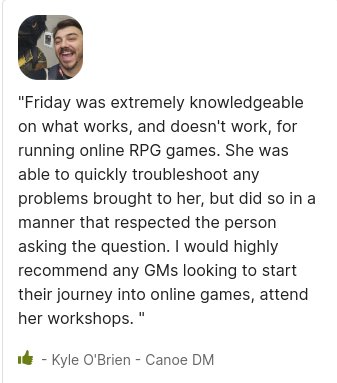
This tier also grants you access to a private category in my Discord with other business-oriented pro GMs who help one another regularly. If you’re not convinced I can help – check out my reviews on my SPG profile.
If you’d like to hear more ramblings from me this week: I guested on a podcast to discuss villains, RPG project leadership, and pro GMing! Check it out here:
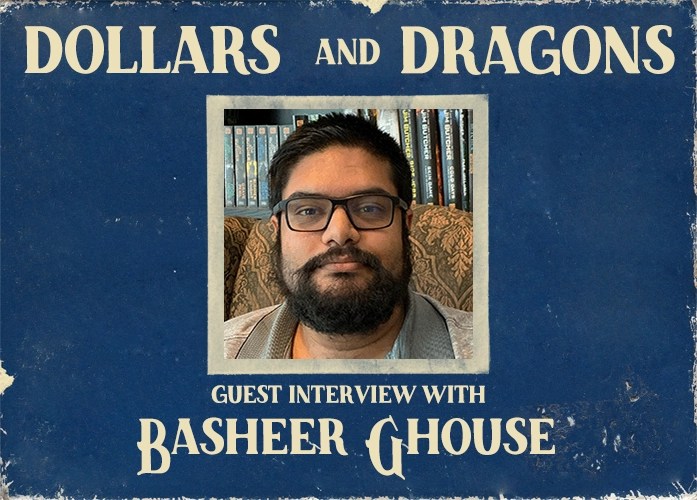
We have Basheer Ghouse (he/him) on the podcast to chat about freelance writing and game design! We also chat about project management, how to get started in the industry, writing routine, and much more. Basheer has credits with Critical Role, Kobold Press, and has recently funded his personal project Guns Blazing!
If you’re here for how to manage a project, this is not the blog post for you. I do management as a project lead (Director) but if you want great advice about management, I suggest you check out Lyla’s blog series on it. We brought Lyla onto the Vineyard Project around the Kickstarter campaign timeframe to clean up our act and boy DID SHE. Highly recommend her for work and if you’re trying to be successful as an indie publisher – you need to read her articles.
Why Being A TTRPG Publisher Fucking Sucks
Vineyard RPG is a passion project. It doesn’t make me money, yet. (Until I’ve sold about 500 more copies.) I’m okay with that, in theory. Ultimately, I’d prefer to not be bankrupted over this but that’s always a possibility. Like most Americans, I’m one medical emergency away from bankruptcy. Due to my life situation with divorce and being a queer, if I didn’t have the support structure I do have – I’d be homeless.
Most of my monetary issues (read: being poor) stem from a decision that I naively made two years ago. I made that silly first publisher mistake. What was I thinking trying to pack in all of my favorite things to one book? Simply put: scope creep can and will kill your project. It has almost killed mine.
I was thinking initially that our campaign would hit $100,000 in funding. It barely scratched $58,000. The scope (content) I had promised is way more expensive than $58,000 to create. So who is making up the difference? Me.
My advice? Don’t do this on your first project. I wish I had been more diligent with this – I definitely had great advice from others to keep scope small. I ignored them at my own peril. Sticking to a small scope and building from there would have saved me a lot of issues. Let big companies take on the risk of a large publishing project.
I could have kept the book to just the villains, cut locations, cut extra stuff – and delivered a great product. That is, if I had initially planned that scope in my pitch to accept peoples’ money. However since I did what I did, I promised what I promised – I am planning to deliver.
Then there is the feeling of not wanting to deliver a terrible product. It horrifies me to think of what would happen if we deliver a low quality book. Not that I’m afraid of 1 star reviews (okay, I am) or mean comments on Twitter (not as much anymore). I have wanted to do something like this my entire life. Finally, after 20 years of dreaming of a moment in time like this, I have the opportunity to really do it.
Don’t I have to do it right? Don’t I have to be perfect? I have to pay people well and do things as ethically as possible. All of those things are expensive.
But that’s my job as the publisher. I have to find the money.
And that’s enough for me. I’m content. I have a beautiful work life where I run games for money and make games for fun. Nowadays I’m doing my best to forget about the financial stress and just enjoy the creation process. I don’t need to make a ton of money, I just want to make enough, you know? I think the only major expenditure in my future is fem surgery, but I live frugally.
Do I think I’m fucked?
Nah. I’ll be fine. It’ll just take me longer to make the book because I need to pay people back in as tight a timeline as I can muster after they turn in work. As the investor, I need to hold myself accountable to the real people who are spending their hours to work on my product.
I’ve dropped the ball on some payments and will be pausing future contractor work so I can catch up before I continue on Vineyard RPG. I’m estimating with my outstanding requests and soon-to-be-invoiced, I’m looking at leveling out in May. I’ll just be working off the invoices I have in the meantime with my other freelancing work.
Do I think I’m returning to 12-15 games a week on Start Playing Games? God, I hope not. I’m very comfortable only running 8-10 games a week, now. I don’t ever want to have to grind like that running games. It was terrible for my mental health.
Still, my income will be supplemented by my freelancing writing and other work for different publishers. I’m thankful for the opportunities, honestly.
In truth: I’ve known about this problem since the campaign funded last year. I knew right away that I was in trouble because of my poor scope decision. I guess now I’m just saying it out loud and in public. Maybe I was in denial?
I think back to when I was running the Kickstarter and we had our terrible start. I was working 6 hours a day that month just on trying to figure out ways to promote it. My eternal thanks to our backers who helped us pull out a victory and fund.
Thank you
I’m a humble small-time publisher and grateful for the opportunity to do this. I won’t let you down.
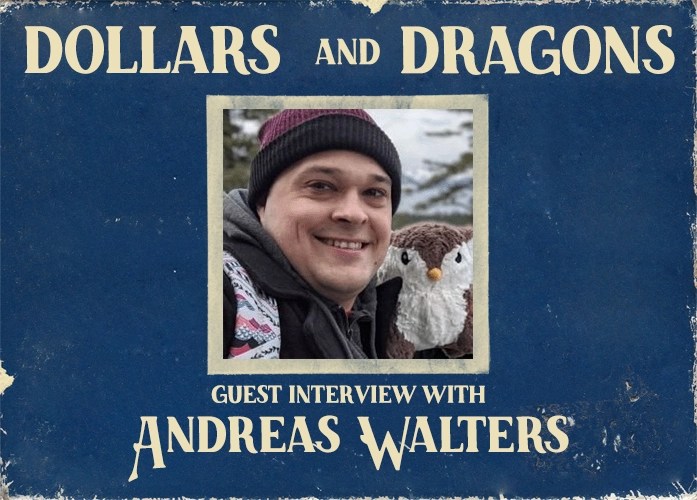
This episode I chatted with Andreas Walters (he/him) about how he got started as a game designer and a lot more. Topics include: Kickstarters, running projects, Metal Weave Games products, manufacturing and distribution.
Show note: This discussion was in the summer of 2023, before education about generative AI was more widespread.
This is not a sponsored newsletter. Lyla is a former collaborator of mine and the game is dope – check it out! For online or in person play.
Be Dramatic. Belt out your karaoke favorites. You’re the star in this TTRPG homage to musicals of the stage and screen.
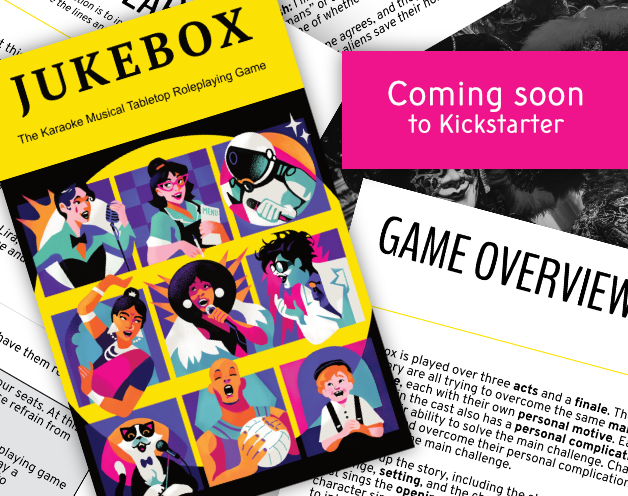
Jukebox: The Karaoke Musical Tabletop Roleplaying Game is a rules-lite, no-game-master required, roleplaying game for 3-4 players. Over three acts and four hours, you and your friends sing karaoke and create a musical story full of drama, passion, and spectacular showstoppers!
Jukebox is all about:
Singing big, dramatic karaoke songs, and for those songs to be pivotal moments in a musical story.
Creating a character-driven narrative where everyone gets complete, meaningful narrative arcs.
Collaborative storytelling where all players shine, regardless of singing ability or familiarity with roleplaying games.
What is Jukebox?
Jukebox: The Karaoke Musical Tabletop Roleplaying Game is a rules-lite, no game-master, no preparation roleplaying game for 3 to 4 players. Over three acts and three to four hours, you and your friends sing karaoke and create a musical story full of drama, passion, and spectacular showstoppers! All you need to play are pencils, index cards, playing cards and a computer or TV connected to the internet.
Jukebox is the result of three years of game development, starting as a D&D 5e module and eventually morphing into its story-game final form. You can read the full story of Jukebox’s development by checking out the Jukebox Journal devlog. The Kickstarter for the first print run of Jukebox will go live January at go.jarofeyes.com/jukebox.
Jukebox Features:
GM-less with no lengthy preparation to host.
Everything you need to play can be found at home: index cards, pencils, playing cards, and a computer or TV with an internet connection.
A beautifully Broadway inspired zine with gorgeous cover art by Chiara Adele Papalia.
Create a playbill keepsake during play with your cast and musical numbers
4 quickstart playbills that provide plot, karaoke playlist, and character prompts to help jump into genre specific stories, such as Disney fairytales or sword and sorcery inspired by power metal.
9 stretch goal quickstart playbills from new and veteran voices in the TTRPG space.
Professional editing and consultation by award winning designers: Jacky Leung (Modiphius Entertainment, Paizo, Evil Hat Productions, MCDM Productions) and Jenn Martin (Bully Pulpit Games, Hunters Entertainment, Simon & Schuster, Thorny Games)