A newsletter and podcast focused on Friday Strout's fiction and tabletop roleplaying games. Featuring top industry contributors from both the professional Game Master scene, game designers, writers, artists, and more!
"Dark Sun Aficionado" | Ep 28 – Robert Adducci (he/him)
Dollars & Dragons Podcast
I had a wonderful sit down with Robert (he/him) who is one of the most experienced Dark Sun GMs and writers in the world. We talked about the setting itself, Adventure League content, being a community manager, his podcast, and much more!
"Committing To The Bit" | Ep 27 – Nala J. Wu (they/them)
Dollars & Dragons Podcast
We had the great Nala J. Wu on the podcast! Recorded on January 11th, heheh – sorry, got quite the pod backlog. We talk about working as an artist, Nala’s start in college, freelancing work, being an Art Director, and more!
Some insight & solutions for people not joining your games
Here it comes. The long dry spell of the summer break.
(Unless it’s in the summer months. Go touch grass, loser.)
People are going outside, sneezing their lungs out from the pollen plague, and finding out they don’t fit into the same clothes they used to. That’s tragic – but still more tragic is that your game listings don’t fit like they used to. That’s why I’m back again for your dose of reality in the pro GMing scene.
Based on my conversations with other pro GMs, my personal experience, and just – you know – paying attention… I have a reasonable schedule that you can expect for your great success. It ultimately comes down to being prepared for the down months and scaling up during the boom months.
The Basic Annual Schedule
BOOM MONTHS WINTER: January – May
I will attribute this to people being sick of their families and getting back into their regular schedules with college or work once again. There has been enough “off time” to grow the desire for clicky clacks.
DOWN TIME SUMMER: June – August
Unfortunately, not many of us in the pro GMing sphere can compete with Tinder or family vacations.
BOOM MONTHS FALL: September – October
Back from summer vacations and back into a regular schedule at college/work, the joins are now back at the table.
DOWN TIME WINTER: November – December
From Thanksgiving to New Years, since the majority of our player base is North American based, we should carefully consider the American holiday schedule for our planning.
How To Keep What You Got
For every “Down Time” month it’s a good idea to have 2 different things prepared for your players who are sticking around.
The Short Campaign
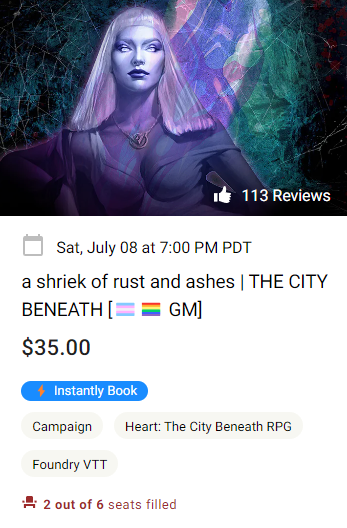
This can be a game that is meant to be short-term like HEART or a short campaign like Foundry VTT’s The Demon Queen Awakens that can take up 3-4 sessions while you wait for half of your party to return. Sometimes you’ll have new players check out your community in the meantime and stick around for that campaign when it picks up again, or another game!
The One Shots
Specifically if you have a history of folks who are very bad about communication and cancel last minute – but you want to keep your valued customers happy with a diversion, I recommend investing in some One Shots at DriveThru RPG or another third party publisher like Kobold Press.
Prep these in your downtime and just have them in the wings waiting for cancellations. Unfortunately, you still have to be paid – and an hour before session isn’t the best time to try to pull a hat trick out.
The Method
In closing, it’s best to recognize that you only have so much time to devote to your pro GMing business. You have to invest in what works and be efficient. I always say that pro GMing is a better part-time job than a full-time because of how up and down the freelancing market can be.
If your chips are down in the summer: Keep experimenting with new things you have been wanting to try but could not because you had a full plate. You might find you can steadily grow an audience for the types of games you’re really passionate for, instead of “having to run the popular stuff”.
The Plug
I have some new campaigns that I’d like to fill now that my life isn’t consumed by the Kickstarter. They are:
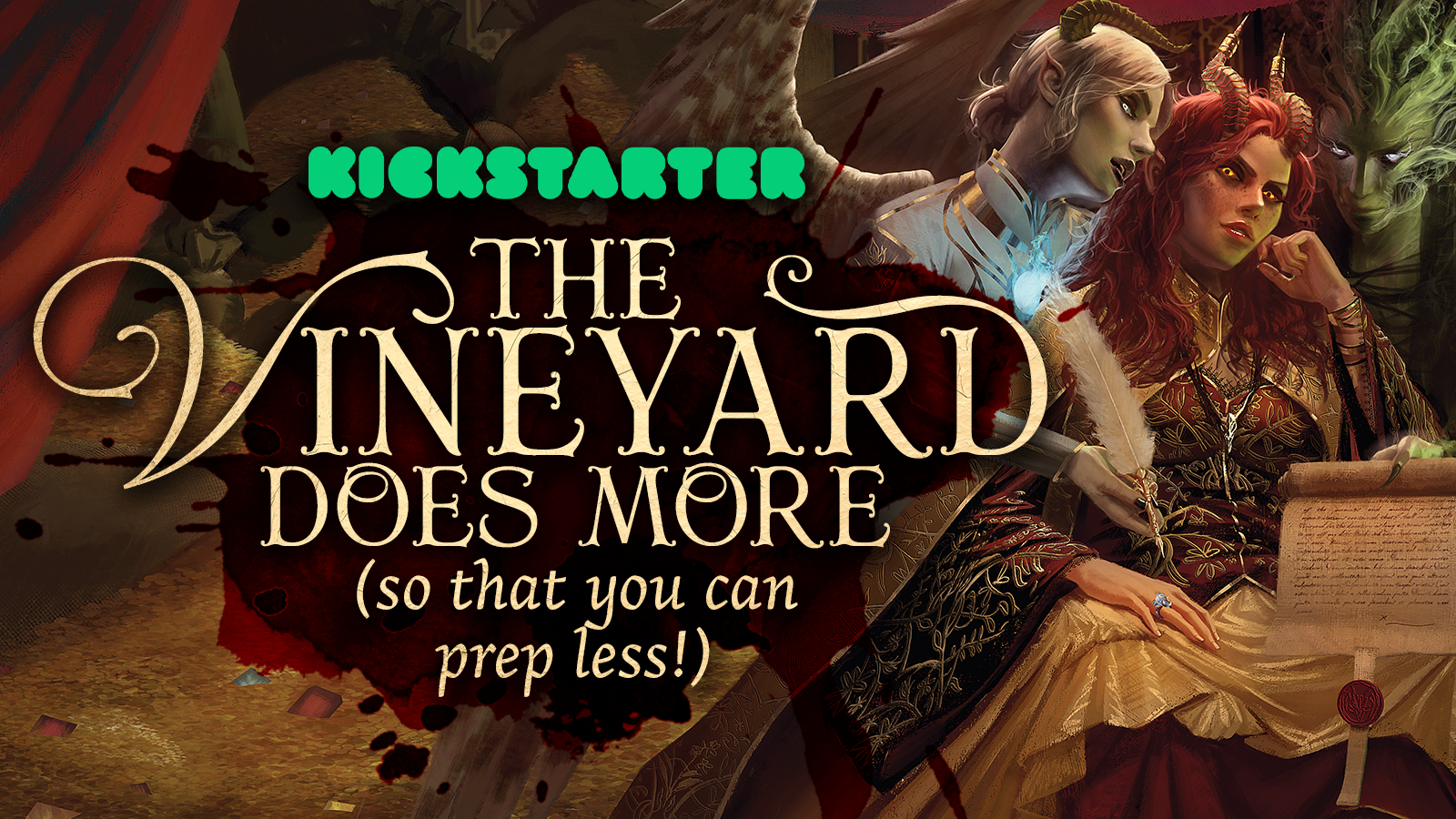
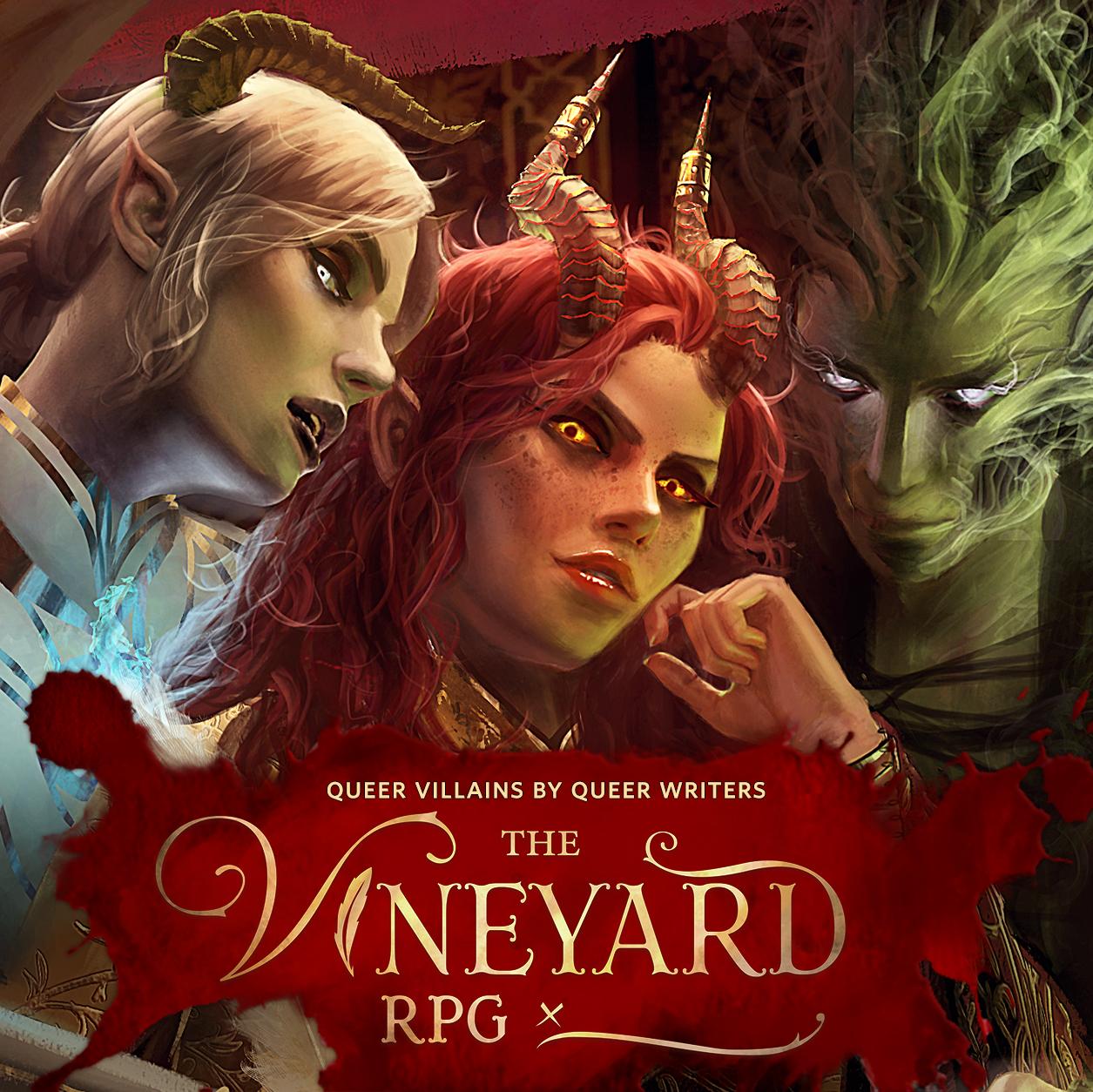
If you’d like to support me and my work, I always appreciate a pre-order for Vineyard RPG, too.
Effective Use Of Audio In Your Horror Game
Curated, well-timed sound FX & music
Hey y’all! Sorry for my unexpected hiatus. The Vineyard RPG really has sucked my availability for some time but I wanted to jump in here at the tail end of my COVID recovery to chat about the importance of sound in your games.
Our principles today are:
The Welcome Screen
Silence
Tension Rising
Confrontation
Thanks for reading Dollars & Dragons! Subscribe for free to receive new posts and support my work.
The Welcome Screen
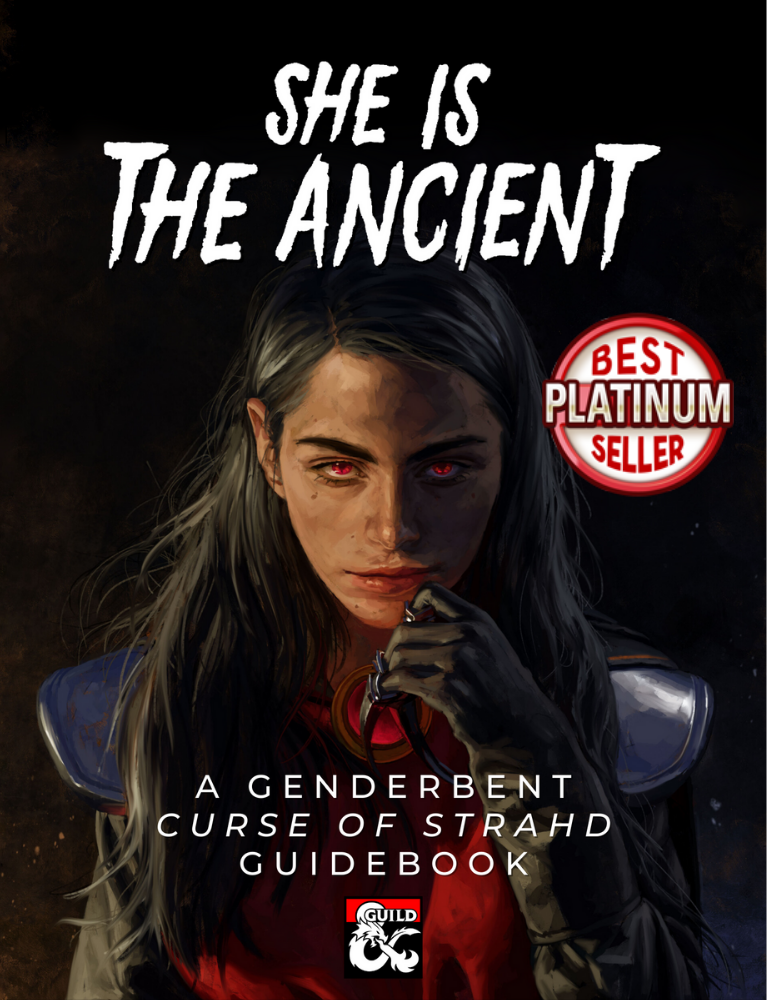
Whenever your players are enjoying “gossip time” or waiting for others to arrive, setting your VTT to play a quiet loop that gets them into the mindset. This trains their brain and will net you rewards long-term. For my She Is The Ancient (Curse of Strahd) games I use Decomposed by Phillip Ayers (Epidemic Sound).
My splash of the Countess Strahd von Zarovich (by Yorsy Hernandez) is there to greet them. It sets the stage. Think about how you want to set the stage.
Tension Rising
In order to raise the bar you want to build the players up over time. Let’s say you roughly plan to have a fight by mid-way into your session? Then you have 45-90 minutes to place “odd” things in front of them or something that lamp posts the oncoming horror. This also gives you a few opportunities for “wolf howls” or other foreshadowing.
With music and ambient sounds, you may keep the volume low at first and slowly build it. Then shift to a more involved track when things get serious or during the reveal.
Silence
One of my prevailing principles is the use of silence to convey something amiss or about to happen. Utilizing those ambient noises (see example below of the chains clinking) can also unnerve players. Once the table has grown accustomed to a soundtrack always playing help tell the story, it will be an indicator that causes their hair to rise.
Confrontation
This is your opportunity for a villain track or emotionally fitting. My players have often lamented “NOT THIS SONG!” after months of playing with me, realizing what it meant before I narrated the villain’s arrival.
I have 3 different Strahd tracks and at least 1 for every major NPC. There is a “someone just died” track that I play post-combat when a PC bites it. The players will grow to remember these songs and associate them with feelings you helped inspire – so try to pick the ones which will evoke the feelings you’re after.
She Is The Ancient 2e
Hey, it’s out and I’m a contributor! Check it out here. Hands down the best Curse of Strahd supplement out there.
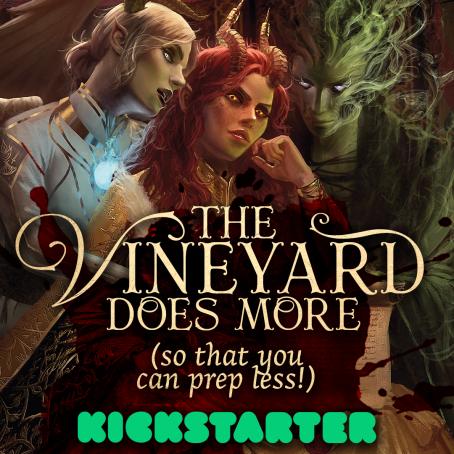
Vineyard RPG final stretch on Kickstarter
Check out the new add-ons!
Thanks to everyone who has supported us thus far. I’ve been overwhelmed with the amount of work between pro GMing and keeping up with the Kickstarter, but I wanted to share with y’all some add-ons newly available. I’ll get back to regular content here soon.
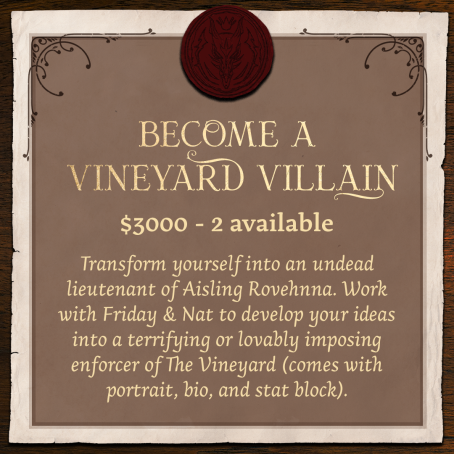
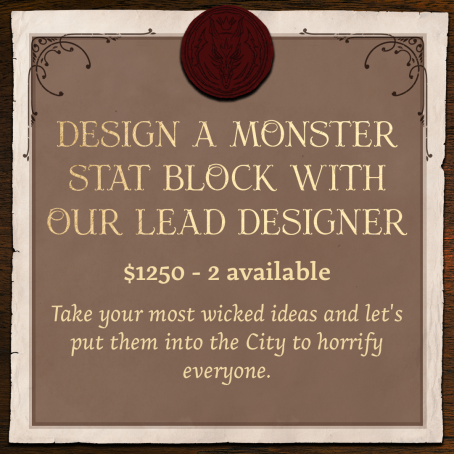
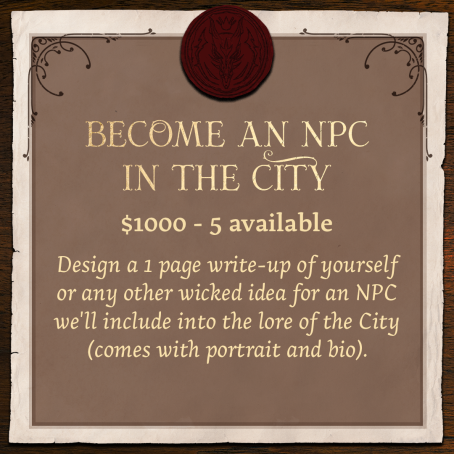
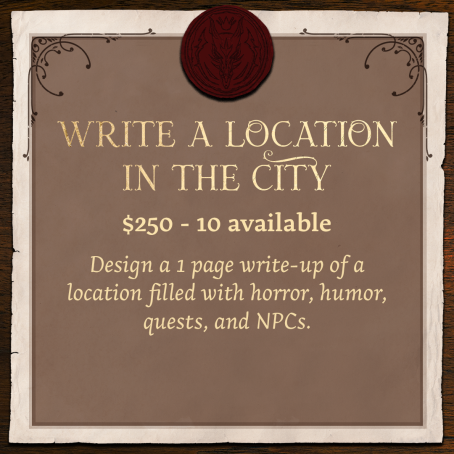
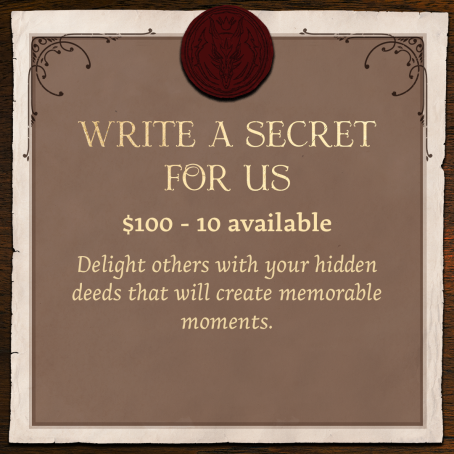
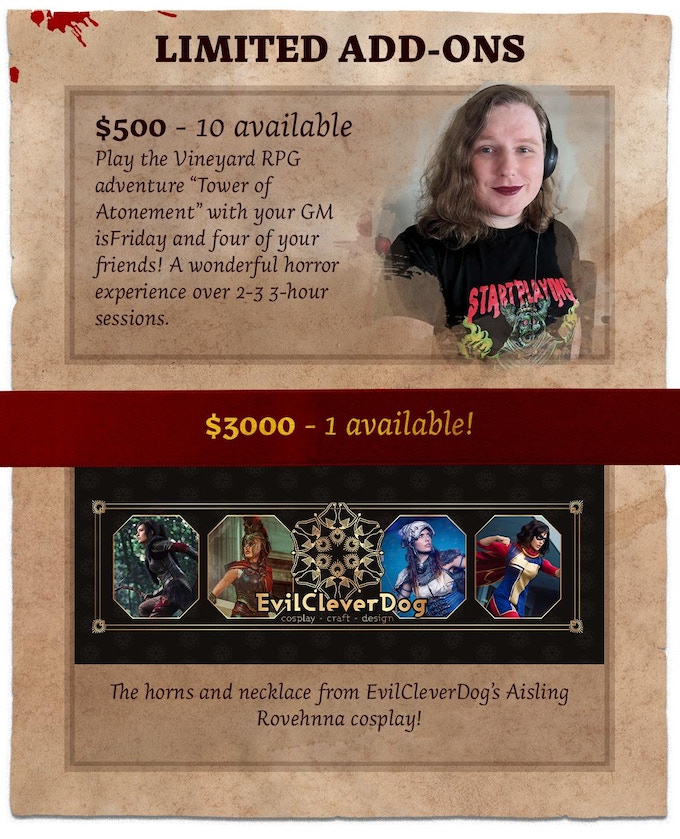
Get involved in helping us write The Vineyard RPG and also help us fund! You’d be going through the same process as our writers do on the team. We have options big and small, depending on your budget.
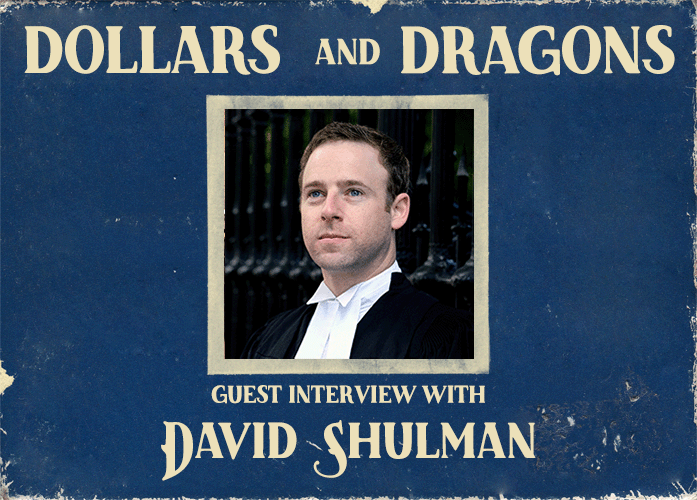
"Thinking Inside The Box" | Ep 26 – David Shulman (he/him)
Dollars & Dragons Podcast
David Shulman (he/him) is the co-founder of dScryb and we chat about everything from how they got started to what they’re doing now. They routinely publish tens of thousands of words for their ongoing subscribers.
Hey y’all! I recently posted in opposition to SPG’s policies concerning AI art for use in their marketplace and consequently had a brief meeting with Devon Chulick, the co-founder of Start Playing Games.
NEW SPG ART ASSETS
AI art has been all the rage if you scroll through the marketplace on SPG, despite there being a lot of licensed art made available by SPG. Some of which are actually… really fucking good. Check out a couple of these royalty-free Shutterstock licensed pieces that are now available whenever you click on the art link in Game Templates.
Devon has stated that “a policy that you cannot enforce is not a good policy.” When asked about integrating an AI detection tool like Hive into their process, Devon did not want to begin developing an entire system around software that not only makes them dependent on another company, but that may become less accurate over time. Instead, the SPG team would prefer to focus on the things they can do to positively impact their GMs.
An Artists Program where pro GMs who are also illustrators and graphic designers are highlighted has been floated as a new initiative they are working on. This would potentially bring more work to those working GMs who also belong to the art community.
“These [Artists Program & more stock art] are the action items that came out of the original AI talk back in February/early March!” – Devon
New SPG Projects
Email to email messages
Perhaps soon you won’t have to struggle through logging into your SPG account on your phone when you get a new join or message.
Some users may find it’s easier to just email someone than log into the site, so that may soon be available.
Required GM Onboarding
SPG wants to give people the tools to succeed.
GMs who take the onboarding are 400% more likely to run paid games than those who do not.
Most GMs who have negative reviews are those who didn’t take the onboarding.
Thanks so much to everyone who has supported our Kickstarter! If you know of any friendly local game stores who you think would be interested in backing our KS, please email me their contact info! I’d love to get in touch. I understand the Retailer Tiers are pretty tight on margins for FLGS, but I’d be willing to give out some absurdly low priced deals to those retailers once we start shipping.
My Top 3 Ways To Focus Before A Game
Use these tips to come in swinging for high-stakes sessions
Being able to rise to the occasion of a planned epic moment within a session isn’t accomplished with good improv, it’s properly planning. Your routine does not have to be complex – mine isn’t. Try these techniques to bring your best to the session.
The walk of solitude
An hour or two before a session I like to go on a walk and listen to music. I deliberately build a list that I can glance at once in a while of things I want to ponder and build hypothetical tools to fall back on. Sometimes this requires that I take notes to reference later – which often means I just voice to text into my Notes on my phone as I’m strolling.
This allows me to formulate “scenario hooks”. This is a concept prominently featured in several The Alexandrian YouTube videos and advice blogs. Scenario hooks are top tier ways to provide yourself with options to improv off of as a starting point.
Jacking steel
You don’t necessarily have to squat heavy weight like I prefer to, sometimes all you need before a session is a set or two of pushups to get your blood pumping. I most often use this before a confrontational opening – like when you’re starting a session with initiative into combat or altercation. Having your blood pumping will help you engage with the confrontation – your roleplaying will be more present.
Bullet point session goals
Sometimes I only go into sessions with 3 bullet points, depending on how comfortable I am with the area the party is currently playing in. The more reading I’ve done (or development) for the world surrounding a location, the less actual prep I need to do. I have a heavy-improv style, so you may want to outline more and more until you feel comfortable.
These bullet points are often things that force the party to engage. Something that just happens, rather than relying on the party to choose to do something beforehand. Example 1: “A guard arrives and questions the party about their identity and accuses them of being X group of thieves.” Example 2: “A roc swoops down and begins attacking the village.”
That’s it for today! Thanks to all of our Kickstarter backers for bringing us to $17,000! We’re over 1/3 of our way to funding The Vineyard RPG. If you are thinking of pledging but you’re uncertain – I encourage you to shoot me your questions to my Twitter, Discord, or send me an email (isfriday at gmail dot com) with any questions. I’d love to hear from y’all!
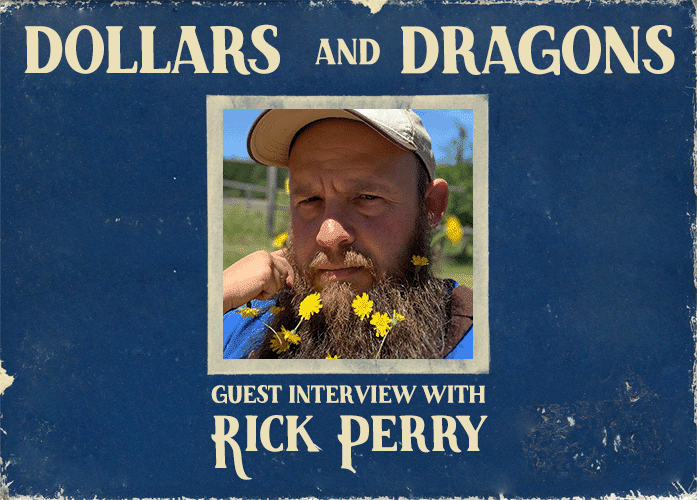
"Carving Out Time" | Bonus ep 3 – Rick Perry (he/him)
Dollars & Dragons Podcast
HELLO INTREPID ADVENTURERS we have with us Rick Perry (he/him), the Creative Producer and Production Designer for Dimension 20! We chat about being Washingtonians, art school, design, everything D20, and more!
Our Kickstarter is LIVE and we appreciate your support if you can pledge! Every little bit helps us reach our goal!
Session 0s and my best practices
Getting started is the most difficult step
There’s a lot to cover in a Session 0! I tend to bring everyone together for a 45-60 minute document read through, discussion, and safety/consent checklist before we even talk about characters. Feel free to use and modify this as you see fit.
Please DO NOT USE THIS DOCUMENT VERBATIM IF YOU ARE NOT ABIDING BY IT.
Here’s my step-by-step process…
Player Expectations:
Let other people play their PCs how they want to play them. Don’t “backseat drive” another character.
Try to share “stage time” or “spotlight” with other players at the table.
Pass the ball as often as possible to involve other PCs to build greater relationships in game and create a richer experience.
Respect one another!
Introduce Yourself:
What is your experience with D&D?
What are you looking for in a D&D game?
Roleplay?
Combat?
Mystery/Intrigue?
Puzzles?
What is your favorite thing about D&D?
Is your schedule regular for this time?
Safety Tools:
Consent – Consent is in a constant state of flow and a player should feel empowered to express that they’re uncomfortable with a theme or situation.
Lines & Veils – Lines are a hard no. Veils are a fade to black or behind the curtain situation. We’ll gather preliminary lines/veils prior to play but all players can change their mind mid-game or post-game.
X – Whenever you feel like you might want to stop what is happening because you’re uncomfortable… DM me an X or put it in chat, or utilize your open door.
Open Door – Any player can get up and take a break – walk away from the game. It’ll alert me that I need to check in with them when they return.
Check Ins – I will try to do my best to check in with players regularly to receive feedback and check on everyone’s well being.
Debrief – I don’t want a formal debrief with players. I want post-game to be the players’ opportunity to unwind informally. Typically after I call a session my players will naturally hang out for 5-15 minutes and discuss the game itself, complete their quest log as a party, and ask clarifying questions of me. I want this also to be the space for players to compliment each other about their play or to be excited about something that is happening. The only thing I’d ask for as a DM is 1 Star and 1 Wish sent to me post-session.
Stars & Wishes –
Star: Something you enjoyed about the game and thought was fun.
Wish: Something you wish the game had. Sometimes I will ask questions about these or discuss the topic privately with a player.
Types of sexual content:
Flirting
Sexual harassment (will not appear)
Sexual assault (will not appear)
I tend to be more reactive than proactive with sexual content in play. Before I begin engaging PCs with NPCs who are going to flirt I always check in for consent with the player prior to the session. (e.g. “Are you interested in an NPC flirting with your PC as a story arc?”) I understand that being a GM means I’m wielding an imbalanced position at the table and gaining consent while someone is roleplaying their character has a higher chance of discomfort or regret – especially with sensual/sexual situations. If a PC begins to engage one of my NPCs in a way that I think is flirting I usually clarify with a direct GM to player question. (e.g. “Is your PC flirting with this person?”)
Relationships between PCs require consent out of the game.
Death:
It is probable that your PC will die.
It is possible that your PC will become undead and out of your control.
If I make a ruling mistake, I will unkill your character
GMing Style:
Fairly loose with rules. I will make stuff up, sometimes.
I will ask you for clarification on your abilities a lot if I’m uncertain.
I will ask you “What does that look like?” often for description of things if I need a moment or need help. That’s not you being wrong, it’s me needing a hand.
I will ask you “What are you doing?” This is usually an indicator that I either want the party to interact or that I need a moment before I can present something for the party to react to. This is not the player being wrong.
Other times I will prompt you via NPC to engage the party in roleplay, but do not think that the NPCs are running the show.
I will present the party with The Problem. It is up to the party how to resolve The Problem. I encourage you to pitch me ideas as a party. If your plan is possible, I will tell you realistically (from GM to player) “This is going to be tough and it is dangerous because <reasons> but you can do this if it goes well.” This does not mean it will work out as intended for a specific result, however. My intent is to meet you in the middle for verisimilitude, not to give you a skeleton key to the game.
CONTENT WARNING:
Pre-game chatter may include discussion about sex, romance, and other personal details. We have an open environment where everyone is encouraged to share but anyone may opt out.
Wrapping up!
I’ve excluded some sections that are game specific, such as “homebrew rules”, etc. Having this discussion along with forwarding folx to a safety/consent checklist for lines/veils is so important for setting the stage. From here I go into PC creation and group formation. That’ll be another article!
Thank you to all of our amazing Kickstarter backers! We’re now at 15k. Let’s keep it going and get to 40%+ in the first week! I’d love to hit some of our incredible stretch goals, not just fund at 100%.
In the Limited Tier add-ons you can reserve a 3 session mini-campaign with me using the Vineyard RPG material! I have it listed as Tower of Atonement on the KS page, but I can run anything, really.